

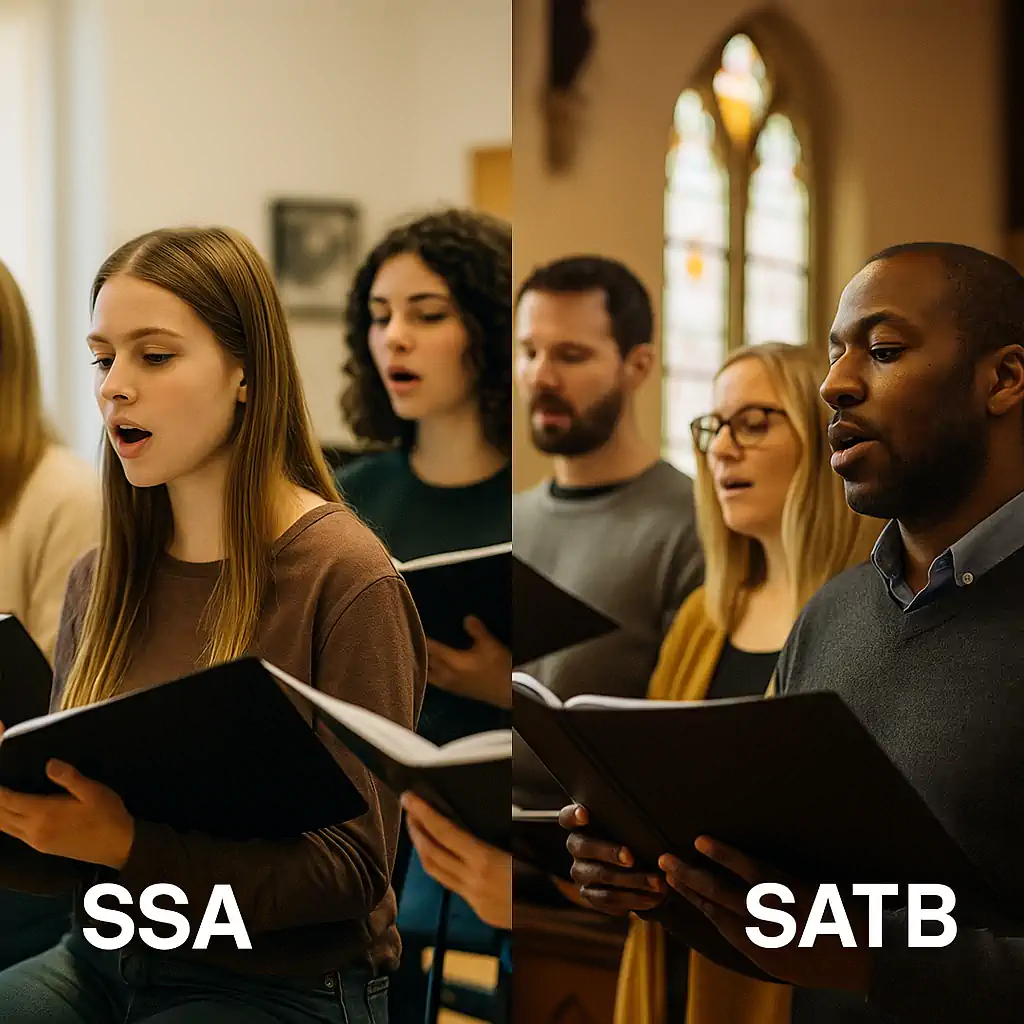
A practical decision guide to pick SSA, SATB or Unison based on real singers, ranges, and rehearsal time.
Start with the choir you actually have
Write two lists: numbers per part and secure ranges of your least-confident singer. This beats every abstract rule.
Comfort-range snapshot (friendly targets):
- Soprano: G4–A5 (with tasteful peaks to C6)
- Alto: A3–C5
- Tenor: C3–E4
- Bass: F2–C4
If three singers fall outside a line's range, that voicing will cost you extra rehearsals.
A quick decision tree
- Mostly treble voices? — Try SSA/SA or Unison + descant
- Reliable T/B who can hold lines? — SATB works
- Short rehearsals + new readers? — SSA/Unison first; add harmony later
- You want weight and antiphony? — Consider SATB, but choose friendly keys
When SSA (or SA) shines
- Schools and small parish ensembles
- Text clarity and fast blend are priorities
- You can add a short descant to create climax without extra teaching
Arranging tricks:
- Keep melody with S1; write S2 in stepwise thirds
- Give Altos a pedal or ostinato for confidence
- Add piano doubling for entrances, then fade it
When SATB is worth the time
- You have steady T/B who show up weekly
- You want harmonic gravity and call-and-response textures
- There's time to teach voice-leading
Tricks for success:
- Tenors thrive when the line sits C3–E4; avoid extended high Fs early in the year
- Double inner parts at the piano for entrances only
- Seat tenors near altos for tuning; basses near piano early on
Flexible scoring = fewer cancellations
Pick (or arrange) pieces that survive multiple scorings:
- Unison/SSA melody with optional harmony lines
- Piano reduction that covers inner parts when a section is missing
- Descant page you can add on big Sundays
Key choice that saves rehearsals
Moving down a tone can change everything. If top notes are tense, drop the key: bright energy beats strained pitch every time.
Matching voicing to season & venue
- Advent/Lent: simpler textures suit reflective spaces; SSA or Unison with drones
- Feast days/Concerts: add SATB or descant to widen the sound
- Live-streamed services: fewer parts = clearer text through phone speakers
Rehearsal tracks and part learning
Give singers 30–60 sec focus clips (melody, then harmony) and label precisely: Bar 13–22 – Alto – slow tempo. Small, accurate files get used.
Bottom line
Pick the voicing that lets today's choir sing beautifully this month. You can always expand textures later.
More posts
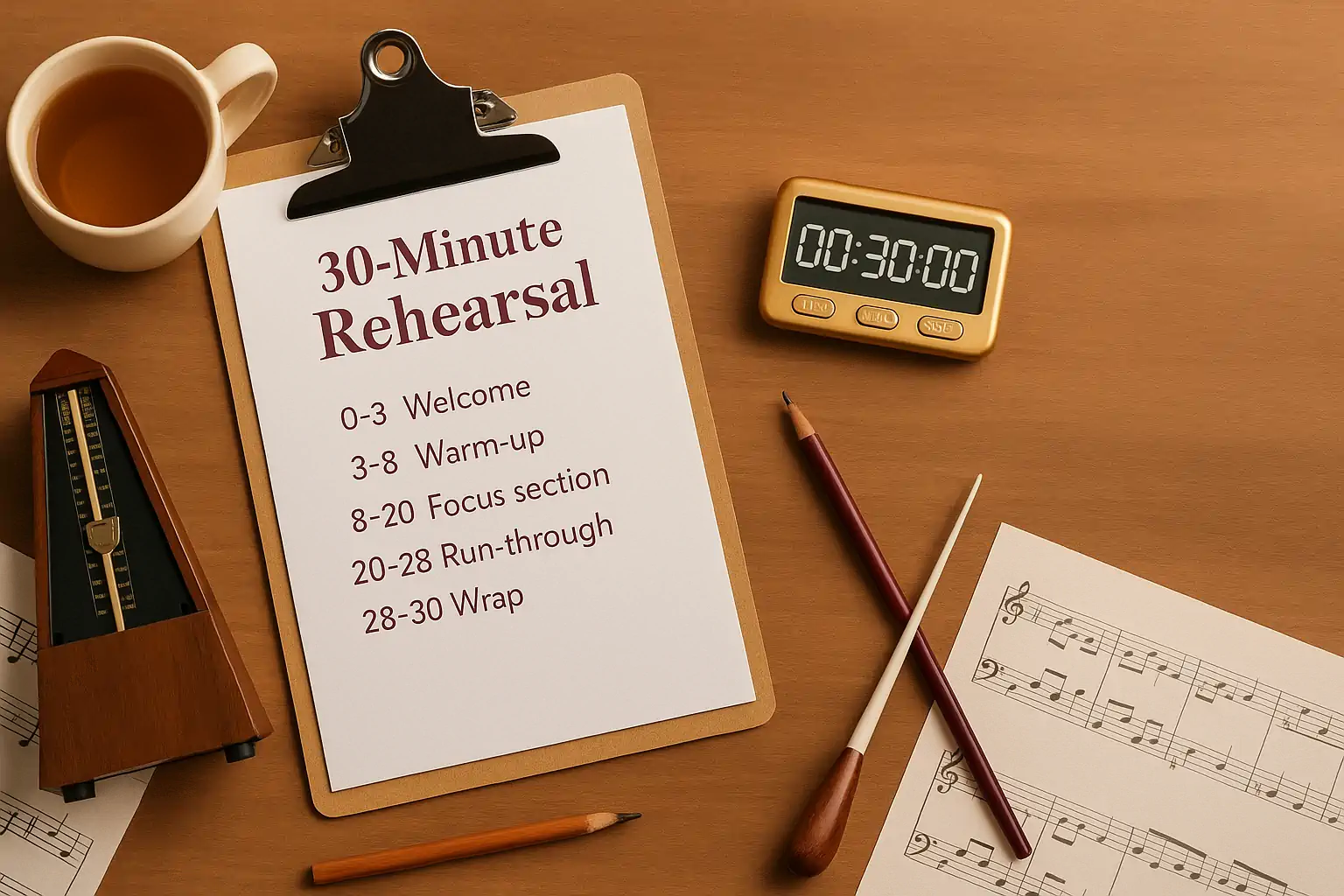
A 30-Minute Choir Rehearsal That Actually Works
A reusable 30-minute plan that keeps rehearsals focused, musical, and calm — even with mixed ability singers.
Licensing 101 for Schools & Churches
Plain-language answers about printing, livestreaming, and uploading performances — plus a copy-and-paste permission email.
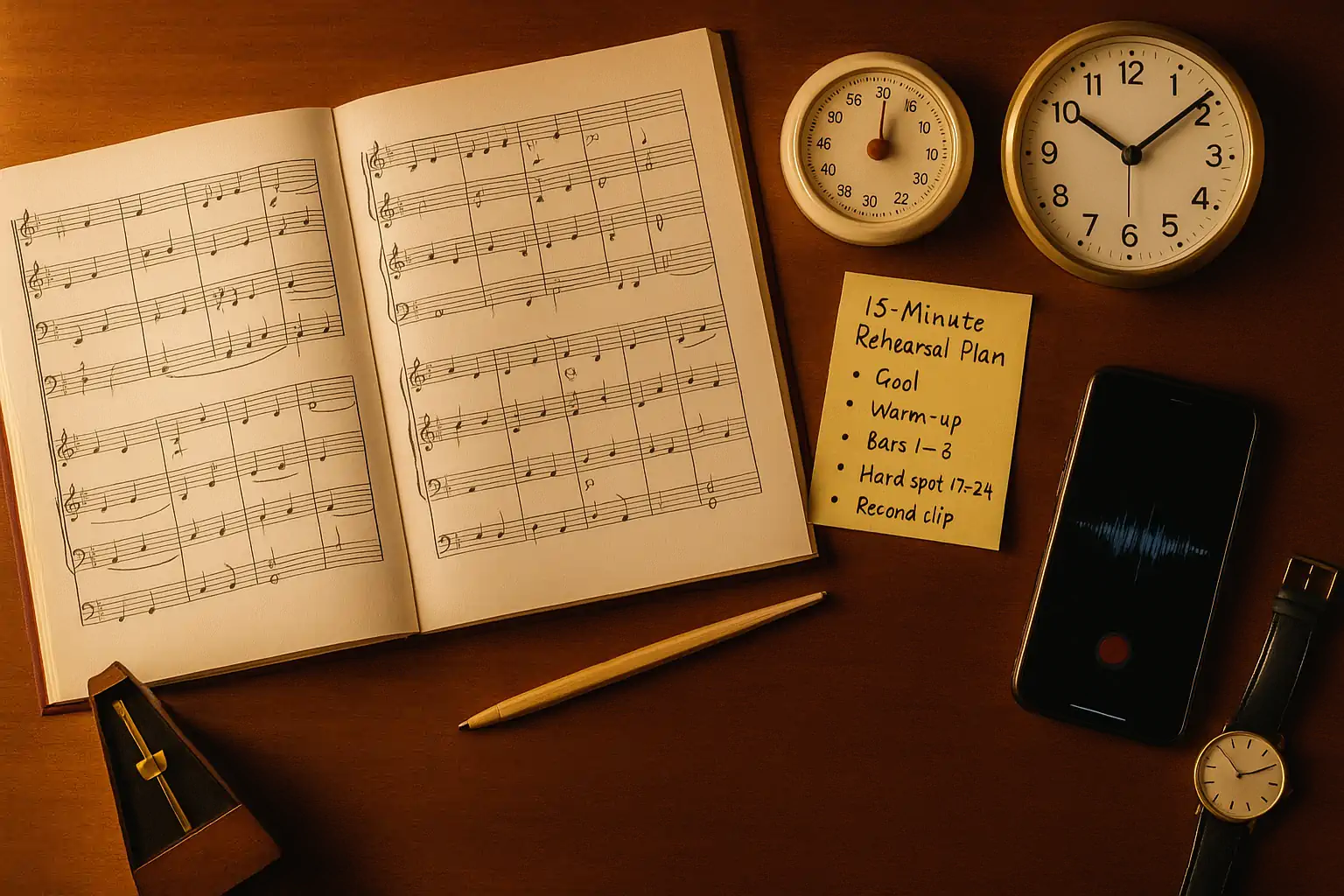
Teach a New Piece in 15 Minutes (First-Rehearsal Plan)
A step-by-step plan for introducing a brand-new piece in 15 minutes — without losing musicality or your singers' attention.